Governance
FactHarbor's association governance follows its published statutes and adopted policies. Those documents establish formal voting, finance and representation rules; this page explains the project model.
Responsibilities
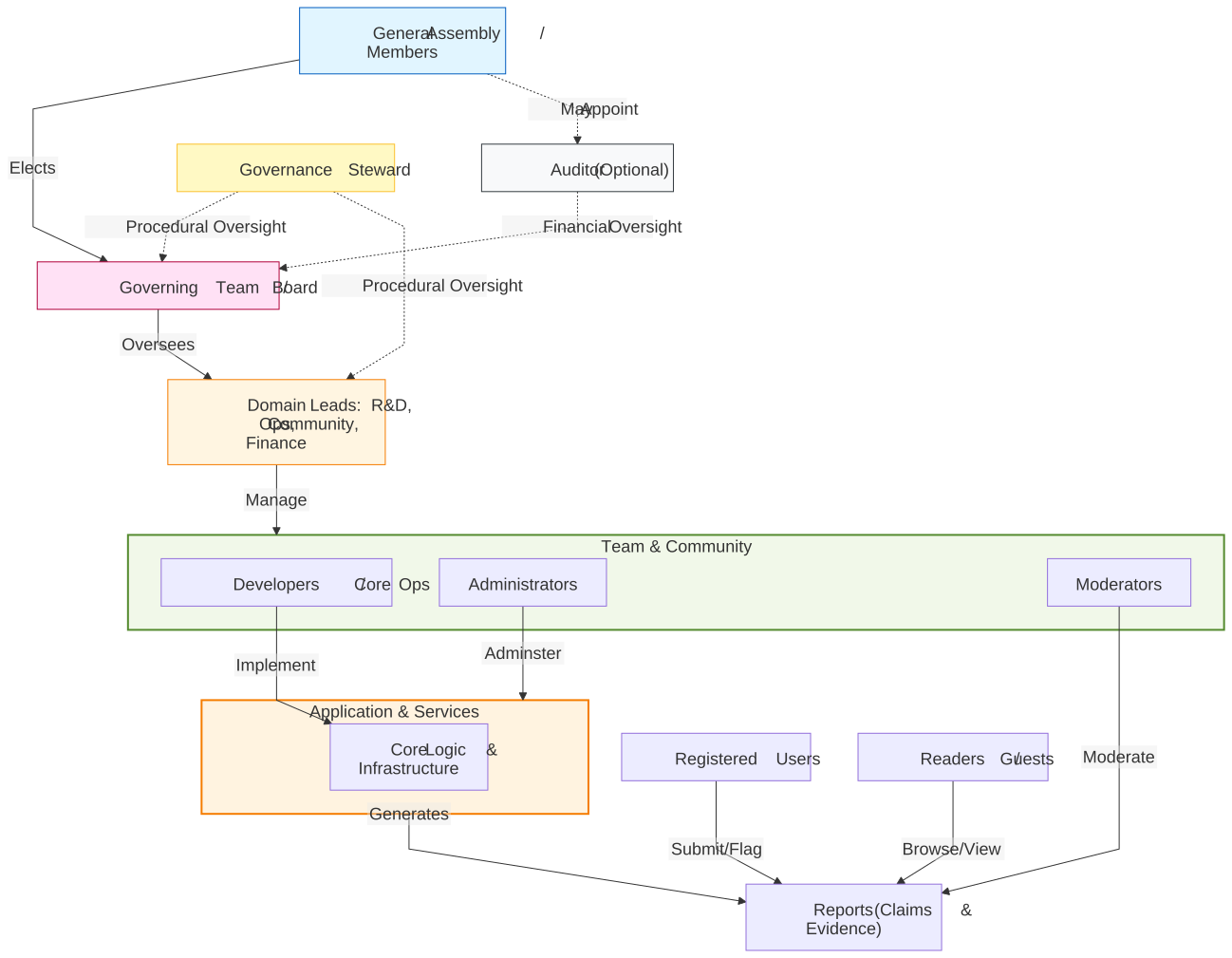
Full-size diagram · Mermaid source
The General Assembly and Board hold the responsibilities given by the statutes. The operational roles in the diagram describe intended responsibilities, not a claim that all roles are staffed. Access to configuration or source code does not itself confer governance authority.
Analysis and human responsibility
The analysis system assesses claims and evidence. People remain responsible for the mission, policies, system design, operation and authorized changes. Reports must expose relevant evidence and limitations so that readers can scrutinize their conclusions.
When a result appears wrong, investigate the underlying cause and propose a general improvement. Do not replace an individual verdict or source score merely to match a preferred conclusion. Record the evidence, alternatives and validation for a change.
Operational degradation, abuse and legal or safety problems can require authorized human intervention. Such intervention must have a stated reason and preserved record; it must not silently turn content preference into a verdict rule. Follow the applicable incident and approval procedures.
Proposals and accountability
Contributors can raise issues and proposals with supporting evidence. Review should make concerns and tradeoffs explicit. Consent-based discussion is part of the collaboration model; it does not supersede formal statutory decisions or the maintainer's technical approval responsibilities.
Keep public policies and contribution terms accessible. Transparency must respect the privacy policy and transparency policy. Financial and conflict procedures remain governed by their adopted documents.
See contributor processes for the practical workflow.